
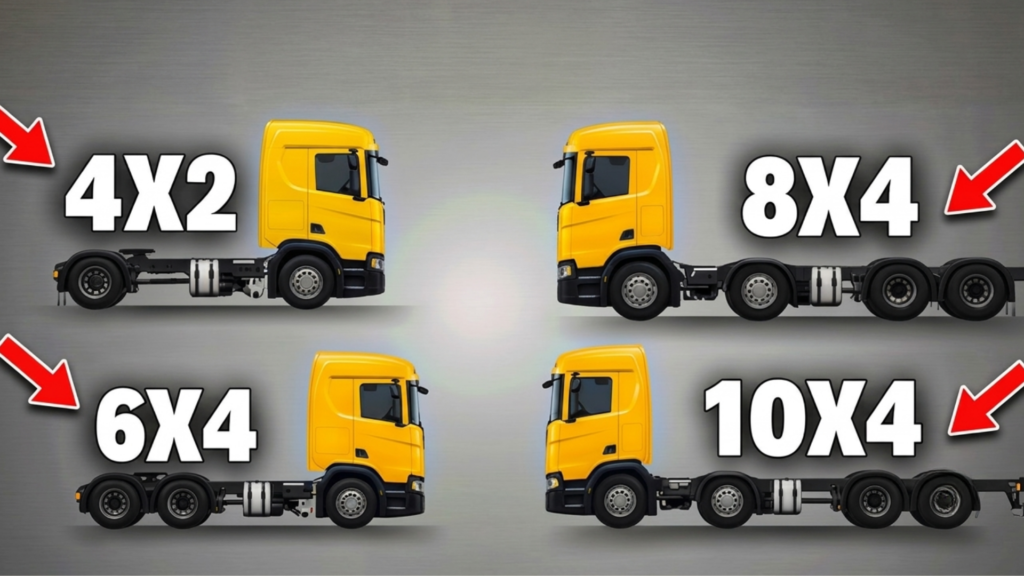
Many people focus primarily on the brand, year, mileage, and price when buying a truck.
However, one of the most important factors is actually the truck configuration.
The right configuration can save you:
- Thousands of euros in fuel costs
- Expensive repairs
- Unnecessary wear and tear
- Loading-related issues
- Higher maintenance expenses
On the other hand, choosing the wrong configuration often leads to lower efficiency and higher operating costs.
What does truck configuration mean?
A truck’s configuration includes:
- Engine type
- Horsepower
- Number of axles
- Drivetrain type
- Transmission
- Wheelbase
- Suspension
- Intended application of the truck
All of these components should be matched to the type of work the truck will perform.
Choosing the right power output: More isn’t always better
Many buyers believe that the more powerful the truck, the better it is.
In reality, an oversized engine can result in:
- Higher fuel consumption
- More expensive maintenance
- Higher taxes and fees
- Costlier repairs
For example:
- For standard international transport, 450-500 hp is often sufficient.
- For heavy-haul operations or mountainous routes, 580+ hp may be necessary.
Finding the right balance between power and actual operational needs is extremely important.
Number of axles and drivetrain type
The axle configuration directly affects:
- Payload capacity
- Stability
- Fuel consumption
- Maneuverability
- Maintenance costs
4×2
The most commonly used configuration for international transport.
Advantages:
- Lower fuel consumption
- Fewer tires
- Lower maintenance costs
- Lower vehicle weight
6×2 or 6×4
Typically used for:
- Heavy-haul transport
- Construction applications